
Mycoplasma genitalium and Ureaplasma in men
Mycoplasma genitalium is a tiny bacterium behind 15 to 25% of non-gonococcal urethritis, and is often why burning persists after chlamydia treatment. It becomes resistant to antibiotics quickly, so its treatment needs a careful plan.
Dr. Rabea Saeed Akram, Consultant Urologist, Andrology and Male Infertility, with a Canadian fellowship from McGill University in male infertility and andrology, and 12 years of experience. Clinics at Dr. Sulaiman Al Habib Hospital in Jeddah, Al Muhammadiyah and Al Faiha branches.
Symptoms
- Burning or a discharge from the penis, especially if it stays or comes back after the usual treatment
- Sometimes epididymitis
- The infection can also cause no symptoms
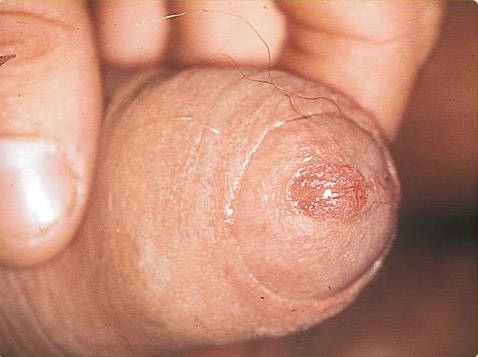
Show the photo: Inflammation at the opening of the urethra not caused by gonorrhoea, one cause being Mycoplasmaa real medical photo
When is it tested?
- With urethritis that keeps coming back or has not improved with treatment
- By a PCR urine test, with a test for antibiotic resistance where available
- Routine testing of men without symptoms is not advised
Treatment
- Its treatment differs from chlamydia, usually comes in two steps, and the second antibiotic is chosen by the resistance test
- Repeating the same antibiotic or taking a random one makes the bacteria more resistant and harder to treat later
- Your wife is tested and treated, and intercourse waits until both treatments are finished
Resistance: why treatment sometimes fails
From 2018 to 2021, a third of strains worldwide (33.3%) resisted one of the two main antibiotics used for it, and 13.3% resisted the other. The second one cures 98% of ordinary strains but only 38% of strains carrying a certain mutation. That is why its treatment needs a resistance test and a check of cure, not a random antibiotic.
Ureaplasma and Mycoplasma hominis: do they need treatment?
Usually not. The European guidance advises against routine testing or treatment in men, with or without symptoms, because carrying them without disease is common, and Ureaplasma urealyticum probably causes urethritis only when present in large numbers. Unneeded treatment adds to bacterial resistance. On fertility, a pooled analysis linked Ureaplasma urealyticum and Mycoplasma hominis with male infertility, while Mycoplasma genitalium and Ureaplasma parvum were not linked.
Other sexually transmitted infections
- Chlamydia
- Gonorrhoea
- Syphilis
- Trichomonas
- Genital herpes
- Genital warts and HPV
- HIV
- Hepatitis B and C
- Mpox
- Pubic lice, scabies and molluscum
- Chancroid, LGV and donovanosis
- All sexually transmitted infections
Why Dr. Rabea Akram?
- Consultant with a Canadian fellowship from McGill University in male infertility and andrology
- 12 years of experience
- In Jeddah: Dr. Sulaiman Al Habib Hospital, Al Faiha and Al Muhammadiyah branches
- No travel abroad, with close follow-up after treatment