
Genital herpes in men: symptoms, diagnosis and treatment
Genital herpes is a common viral infection that causes painful blisters and sores that come back. No medicine removes the virus for good, but treatment shortens outbreaks, makes them less frequent and protects your wife.
Dr. Rabea Saeed Akram, Consultant Urologist, Andrology and Male Infertility, with a Canadian fellowship from McGill University in male infertility and andrology, and 12 years of experience. Clinics at Dr. Sulaiman Al Habib Hospital in Jeddah, Al Muhammadiyah and Al Faiha branches.
What it is, and how common
It is caused by herpes simplex virus: type 2 is mostly passed on during sex, and type 1 can reach the genitals through oral sex. In 2020 about 520 million people aged 15 to 49 carried type 2 worldwide. In the Middle East and North Africa about 1 adult in 20 carries it, and the figure may be rising.
Symptoms
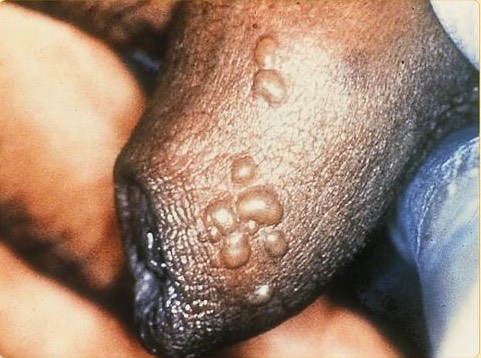
- Small clustered blisters on or around the penis that burst into painful sores and then heal
- Tingling or burning in the spot before the blisters, in some outbreaks
- The first outbreak can be severe and long
- Most people with type 2 have never been diagnosed because their symptoms are mild or unnoticed, yet they shed the virus from time to time
Show the photo: Clusters of small blisters on the penis in genital herpesa real medical photo
The tests
- A PCR swab from the sore: the most accurate test, and it shows the type, since type 2 comes back more often
- A type-specific blood antibody test helps in certain cases, such as repeated symptoms with a negative swab, or a wife who has herpes
- Routine blood testing without symptoms is not advised, nor is the IgM test
- A common blood test for type 2 often gives false positives at low values (1.1 to 3.0), which need confirming
- Any genital sore also needs tests for syphilis and HIV
Treatment
- Treatment with antiviral medicines the doctor chooses: they shorten an outbreak, make outbreaks less frequent and protect your wife
- For frequent outbreaks, daily treatment cuts them by 70 to 80%
- An outbreak responds best when treatment starts early, so see the doctor at the first outbreak
- Antiviral creams help very little and are not advised
How do you protect your wife?
When the infected partner took a daily antiviral treatment, symptomatic infection developed in 4 of 743 partners versus 16 of 741 on placebo, and all infections were roughly halved. Condoms used every time lowered the risk of passing type 2 by 30%. Intercourse is avoided during an outbreak.
Complications
- Type 2 raises the risk of catching HIV about three-fold
- A psychological toll from repeated outbreaks, which daily treatment eases
- Passing to a newborn if the mother is infected near delivery
What is new in research
Still no vaccine
There is no approved herpes vaccine. In September 2024 GSK announced that its therapeutic vaccine missed its phase II goal and will not go on to phase III.
New European guidelines
Updated European guidelines on genital herpes came out in 2024; the US guidelines are still the 2021 edition.
Other sexually transmitted infections
- Chlamydia
- Gonorrhoea
- Syphilis
- Mycoplasma and Ureaplasma
- Trichomonas
- Genital warts and HPV
- HIV
- Hepatitis B and C
- Mpox
- Pubic lice, scabies and molluscum
- Chancroid, LGV and donovanosis
- All sexually transmitted infections
Why Dr. Rabea Akram?
- Consultant with a Canadian fellowship from McGill University in male infertility and andrology
- 12 years of experience
- In Jeddah: Dr. Sulaiman Al Habib Hospital, Al Faiha and Al Muhammadiyah branches
- No travel abroad, with close follow-up after treatment