
HIV: testing, treatment and prevention
HIV has become a manageable chronic condition: with treatment people lead long and healthy lives, and once the virus is undetectable in the blood it does not pass on during sex. Prevention today is a pill or an injection, and testing is the first step.
Dr. Rabea Saeed Akram, Consultant Urologist, Andrology and Male Infertility, with a Canadian fellowship from McGill University in male infertility and andrology, and 12 years of experience. Clinics at Dr. Sulaiman Al Habib Hospital in Jeddah, Al Muhammadiyah and Al Faiha branches.
Symptoms
- In the first weeks there may be fever, a rash, swollen glands, muscle and joint aches and headache, like flu
- Then years may pass with no symptoms while the virus weakens immunity
- So only a test can tell
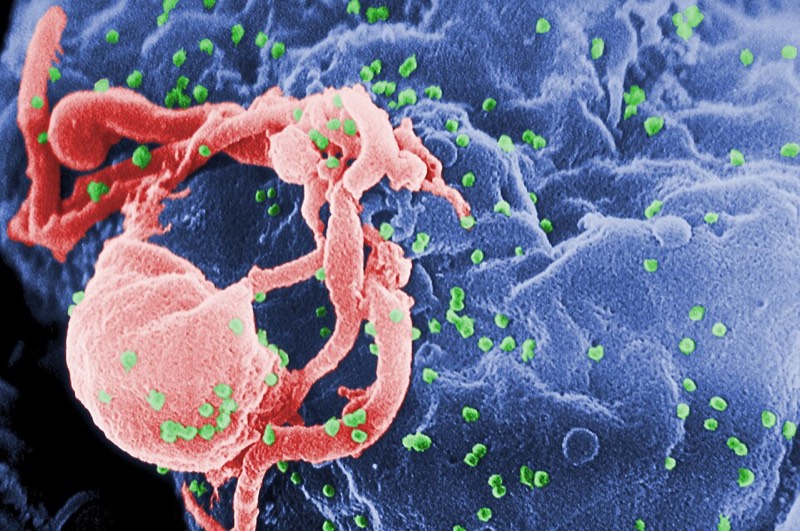
Show the photo: HIV (in green) leaving an immune cell, under the electron microscopea real medical photo
The test, and when it finds the infection
- No test finds the infection straight away; each has a window period
- PCR (NAT) test: 10 to 33 days after exposure
- Fourth-generation (antigen/antibody) test on blood from a vein: 18 to 45 days
- Rapid finger-prick tests: 18 to 90 days; antibody tests: 23 to 90 days
- If a test after a possible exposure is negative, repeat it after the window period
- Everyone between 13 and 64 is advised to have at least one HIV test
Treatment
Antiviral treatment starts as soon as possible for everyone with HIV, whatever the immune cell count, to protect health and stop transmission. In the PARTNER study of 782 couples where the partner with HIV had an undetectable virus on treatment, there were no infections from them despite 76,088 acts of sex without a condom. That is what "undetectable = untransmittable" means.
Prevention
- Pre-exposure prevention (PrEP) for those at high risk: daily pills or injections, including one every 6 months, prescribed and followed by a doctor
- Post-exposure prevention (PEP): start as soon as possible, ideally within 24 hours and no later than 72 hours, and take it for 28 days
- Circumcision lowers the risk of infection in men by 50 to 60% in sex with women
- Treating other STIs, since herpes for example raises the risk about three-fold
In Saudi Arabia and the world
At the end of 2025, 41 million people were living with HIV worldwide. In Saudi Arabia the compulsory premarital check includes an HIV test: in a study of 74,662 people (2010) the rate was 0.03%, and in 2021 data on 114,740 people HIV was less common than hepatitis B and C, with men more affected than women.
What is new in research
An injection every 6 months to prevent HIV
A new preventive injection: no infections among 2,134 women in PURPOSE 1, and among men in PURPOSE 2, 0.10 infections per 100 person-years versus 0.93 with daily pills. The US FDA approved it in June 2025.
A weekly treatment pill
In the ISLEND-1 trial (2026), a treatment pill taken once a week was not inferior to a daily pill at keeping the virus undetectable.
Is there a cure?
A very few lasting remissions have followed bone-marrow transplants for blood cancer, the latest published in 2026, but this is not a treatment for anyone else.
Other sexually transmitted infections
- Chlamydia
- Gonorrhoea
- Syphilis
- Mycoplasma and Ureaplasma
- Trichomonas
- Genital herpes
- Genital warts and HPV
- Hepatitis B and C
- Mpox
- Pubic lice, scabies and molluscum
- Chancroid, LGV and donovanosis
- All sexually transmitted infections
Why Dr. Rabea Akram?
- Consultant with a Canadian fellowship from McGill University in male infertility and andrology
- 12 years of experience
- In Jeddah: Dr. Sulaiman Al Habib Hospital, Al Faiha and Al Muhammadiyah branches
- No travel abroad, with close follow-up after treatment